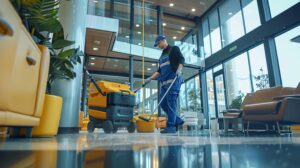
A clean workplace is never an accident. Behind every spotless reception, streak-free glass door and fully stocked washroom sits a system a clear, repeatable routine that makes sure nothing gets missed from one day to the next. That system is a commercial cleaning checklist, and it’s the single most useful tool for keeping any business premises hygienic, compliant and presentable.
Whether you run an office, a school, a shop, a warehouse or a busy restaurant, the principle is the same: define what needs cleaning, decide how often, and check it off. This guide gives you a complete, ready-to-use checklist for business premises organised by frequency, broken down zone by zone, tailored to different sectors, and grounded in the UK hygiene and safety standards that a professional cleaning company should actually follow.
What Is A Commercial Cleaning Checklist?
A commercial cleaning checklist is a structured list of cleaning tasks for a business premises, grouped by how often each task needs doing typically daily, weekly, monthly and periodically. It sets out what should be cleaned, where, and to what standard, so that hygiene is consistent and nothing important is overlooked.
A good checklist does three jobs at once. It keeps standards high by turning cleaning into a defined process rather than guesswork. It protects health and safety by making sure high-risk areas are treated correctly and cross-contamination is avoided. And it creates accountability, giving managers and cleaning teams a shared reference for what “done” looks like.
Cleaning Frequencies Explained
Before the tasks themselves, it helps to understand the four frequencies most commercial checklists are built around. Not every task needs doing every day matching each job to the right interval keeps your premises consistently clean without wasted effort.
- Daily — high-traffic and high-touch tasks that keep the premises safe and presentable every working day: bins, washrooms, touchpoints, floors in busy areas.
- Weekly — deeper tasks that maintain standards but don’t need daily attention: internal glass, dusting, disinfecting appliances, detailed floor care.
- Monthly — periodic jobs that prevent long-term build-up: high-level dusting, upholstery, descaling, vents and skirting.
- Quarterly and periodic — deep cleans using specialist equipment: carpet and hard-floor treatment, washroom deep sanitisation, cleaning behind and beneath fixed appliances.
The right frequency depends on how busy your premises are. A quiet studio office might manage on two visits a week; a school, gym or restaurant will need daily attention and more frequent deep cleans.
The Core Commercial Cleaning Checklist
The tasks below apply to almost any business premises. Use them as your foundation, then add the sector-specific items further down.
Daily cleaning tasks
- Empty all waste and recycling bins and replace liners.
- Clean and disinfect high-touch points — door handles, push plates, light switches, lift buttons, handrails, shared keyboards and phones.
- Clean and sanitise all washroom fixtures; restock soap, paper towels and toilet roll.
- Wipe and sanitise kitchen and break-room surfaces, sinks and appliance exteriors.
- Vacuum entrance matting and carpets in reception and walkways.
- Mop hard floors in entrances, corridors and high-traffic areas.
- Spot-clean internal glass doors and partitions for fingerprints and smudges.
- Tidy and wipe reception and communal surfaces.
Weekly cleaning tasks
- Dust desks, workstations, shelving, sills and ledges.
- Clean internal glass, mirrors and partition panels thoroughly.
- Disinfect kitchen appliances microwave, kettle, fridge handles and interiors as needed.
- Damp-mop all hard floors, including lower-traffic rooms.
- Vacuum all carpeted areas, including under and around furniture where accessible.
- Wipe down doors, frames and thresholds.
- Descale visibly limescaled taps and washroom fittings.
Monthly cleaning tasks
- High-level dusting light fittings, vents, ceiling corners and the tops of partitions and cabinets.
- Dust and wipe skirting boards, blinds and window sills in detail.
- Clean upholstered chairs and soft furnishings; spot-treat marks.
- Deep-clean kitchen appliance interiors and remove out-of-date items from fridges.
- Clean light switches, sockets and wall marks in high-traffic zones.
- Remove cobwebs and clean hard-to-reach areas.
Quarterly and periodic deep cleaning
- Professional carpet cleaning and hard-floor stripping, sealing or polishing.
- Full washroom deep sanitisation, including grouting, pipework and extract vents.
- Cleaning behind and beneath fixed appliances and heavy furniture.
- Internal high-level and external window cleaning (as access allows).
- Upholstery and fabric deep cleaning.
Zone-By-Zone Checklist
Organising by area is the other half of a strong checklist. Here’s what each key zone of a business premises needs.
Entrances and reception. First impressions land here. Keep entrance matting vacuumed to trap dirt, glass doors clear of fingerprints, the reception desk sanitised, and floors dry and hazard-free. Waiting-area seating and touch surfaces should be wiped daily.
Workspaces and general areas. Desks, shared equipment and communal touchpoints are the priority. Encourage a clear-desk approach so surfaces can be properly wiped, and keep floors and general clutter under control.
Washrooms and toilets. The highest-risk zone in most premises. Toilets, urinals, basins, taps and floors need daily cleaning and disinfection, with consumables restocked every visit. This area should always be cleaned with dedicated, colour-coded equipment (more on that below).
Kitchens and break rooms. Food-hygiene territory. Sanitise all surfaces, sinks and appliance exteriors daily, empty food waste promptly, and keep the fridge and microwave clean. Use separate equipment reserved for food areas.
Floors. Different surfaces need different care — vacuuming for carpets, appropriate mopping for hard floors, and periodic machine treatment for both. Wet-floor signage during cleaning is a basic safety must.
Waste. Bins emptied daily, liners replaced, and waste segregated for recycling and disposal in line with your duty of care.
Don’t overlook high-touch points
Touch is one of the biggest routes for spreading germs across a building. That makes touchpoint cleaning — the frequent disinfection of the surfaces hands contact most — one of the highest-value tasks on any checklist. Prioritise door handles and push plates, light switches, lift and access-control buttons, handrails, shared devices, kettle and fridge handles, and washroom taps and flush handles. In busy premises these deserve attention more than once a day.
Tailoring The Checklist To Your Type Of Premises
The core checklist covers the essentials, but every sector has its own priorities. Here’s how to adapt it.
Offices
Offices centre on desks, shared equipment, meeting rooms, kitchens and washrooms, with reception and glass frontage key to the professional impression you make on visitors. Breakout areas, hot-desks and co-working spaces need extra touchpoint attention because so many people share them. A consistent daily routine plus periodic deep cleans keeps most workplaces in good order — our guide to professional office cleaning in Milton Keynes explains how a tailored office schedule works in practice.
Schools and education
Schools combine high footfall, shared surfaces and a vulnerable, young population, so infection control matters more than almost anywhere. Classrooms, corridors, toilets, dining halls and sports facilities each need dedicated routines, with intensive touchpoint cleaning during term time and deeper cleans during holidays. Cleaning staff working on school sites should be DBS-checked as a safeguarding requirement — a standard any reputable provider will meet as a matter of course. You can read more on our approach to school cleaning in Milton Keynes.
Retail and showrooms
In retail, presentation and safety go hand in hand. Glass frontage, floors, fitting rooms, tills and high-touch display areas need frequent attention, especially during trading hours, with floors kept clean and dry to avoid slip hazards in front of customers.
Healthcare and medical
Clinical settings demand the strictest standards, with rigorous disinfection protocols, clinical waste handling and infection-control procedures. Colour-coded equipment is essential, and healthcare sites follow a specific colour convention (see below) aligned with NHS and CQC expectations.
Warehouses and industrial units
Here the focus shifts to floors, welfare facilities, communal areas and dust control across large spaces. Loading bays, break rooms and washrooms need regular attention, and floor cleaning often calls for ride-on or industrial machinery.
Gyms and leisure
Sweat, shared equipment and moisture make gyms a hotspot for bacteria. Equipment touchpoints, mats, changing rooms and showers need frequent disinfection throughout the day, with humid areas managed carefully to control mould and odour.
Hospitality and restaurants
Front-of-house presentation meets back-of-house food hygiene. Dining areas, toilets and touchpoints need constant attention during service, while kitchens follow strict food-safety cleaning — with equipment kept strictly separate from other zones.
The Compliance Layer: What A Professional Checklist Includes
This is where a professional standard pulls ahead of a basic tick-list. A commercial clean isn’t just about appearance — it has to meet UK health, safety and hygiene obligations. The elements below are what turn a simple checklist into a compliant one.
Colour-coded cleaning equipment
Colour-coded cleaning is a UK hygiene standard developed by the British Institute of Cleaning Science (BICSc) to stop bacteria being carried from one area to another. Each zone is assigned a colour of cloth, mop, bucket and gloves, and that equipment never leaves its zone. The widely used convention is:
| Colour | Where it’s used |
| Red | Washrooms and toilets — the highest-risk sanitary areas |
| Blue | General low-risk areas — offices, classrooms, receptions, corridors |
| Green | Kitchens and food-preparation areas |
| Yellow | Washroom basins and surfaces (and, in healthcare, clinical and isolation areas) |
The golden rule is simple: equipment stays in its zone and colours are never mixed. Using the same mop for a toilet floor and a classroom floor is exactly how harmful bacteria spread — colour-coding prevents it. Note that healthcare settings follow a slightly different convention, where yellow denotes clinical areas; if you run a medical or care facility, align with NHS and CQC guidance.
COSHH and safe use of chemicals
Cleaning products are chemicals, and their use is governed by the Control of Substances Hazardous to Health (COSHH) Regulations. A compliant clean means using products correctly, storing them safely, following manufacturer safety data sheets, and ensuring staff are trained and protected. Professional providers supply their own COSHH-compliant products as standard.
Meeting your legal duty to keep premises clean
Under UK workplace health, safety and welfare law, employers have a duty to keep workplaces, furnishings and fittings sufficiently clean. A documented cleaning checklist is one of the clearest ways to demonstrate you’re meeting that obligation — useful for audits, inspections and insurers alike.
Waste and duty of care
Commercial waste carries a legal duty of care: it must be stored, segregated and removed appropriately, with hazardous or clinical waste handled separately. Your checklist should cover not just emptying bins but managing waste responsibly.
Risk assessments and method statements
For anything beyond routine wiping working at height, using machinery, or cleaning higher-risk areas a professional operation works to risk assessments and method statements (RAMS). These set out how a task is done safely and are a hallmark of a properly run cleaning service.
How To Build Your Own Cleaning Schedule
Turning this checklist into a working routine takes a few practical steps:
- Walk your premises and list every area. Note the surfaces, fixtures and touchpoints in each zone.
- Assign a frequency to each task using the daily, weekly, monthly and periodic framework above.
- Match tasks to zones and equipment, applying colour-coding so each area has its own kit.
- Set responsibilities and timings — who cleans what, and when, so cleaning fits around your operating hours.
- Build in checks. A sign-off sheet or digital record keeps standards consistent and flags issues early.
- Review regularly. Footfall, seasons and business changes all shift your cleaning needs over time.
When To Bring In A Professional Cleaning Company
An in-house routine works well for smaller premises, but as a site gets busier or where compliance, deep cleaning or specialist equipment come into play a professional provider usually delivers better, more consistent results. A commercial cleaning company brings trained, vetted operatives, COSHH-compliant products, industrial equipment, colour-coded systems and the documentation that keeps you compliant, all built around a schedule tailored to your premises.
At Prokleen, we provide professional commercial cleaning across Milton Keynes and the surrounding area, with bespoke schedules for offices, schools and business premises of every kind. If you’d like a cleaning routine designed around your site, we’re happy to help.
FAQs
What should be included in a commercial cleaning checklist?
A commercial cleaning checklist should cover tasks grouped by frequency daily, weekly, monthly and periodic across every zone of the premises: entrances and reception, workspaces, washrooms, kitchens, floors, high-touch points and waste. A professional checklist also includes compliance elements such as colour-coded equipment, COSHH-safe products and correct waste handling.
How often should commercial premises be cleaned?
Most business premises need daily cleaning of high-traffic and high-touch areas such as washrooms, kitchens, touchpoints and busy floors, with weekly and monthly tasks for deeper maintenance and quarterly or biannual deep cleans. Busier sites like schools, gyms and restaurants generally need daily cleaning and more frequent deep cleans.
What is the colour-coded cleaning system?
Colour-coded cleaning assigns a specific colour of equipment to each area to prevent cross-contamination. In the common UK convention, red is for washrooms and toilets, blue for general areas, green for kitchens, and yellow for washroom surfaces (or clinical areas in healthcare). Equipment never leaves its designated zone.
What is the difference between commercial and domestic cleaning?
Commercial cleaning covers business premises offices, schools, shops, warehouses and similar and works to defined hygiene and safety standards, often with specialist equipment, trained operatives and compliance documentation. Domestic cleaning covers private homes and is generally smaller in scale with fewer regulatory requirements.
Do I need a professional cleaning company or can I clean in-house?
Smaller, lower-traffic premises can often be maintained in-house with a clear checklist. Larger or busier sites and any premises with significant compliance, deep-cleaning or specialist needs usually benefit from a professional provider that brings trained staff, compliant products, industrial equipment and proper record-keeping.
What is touchpoint cleaning and why does it matter?
Touchpoint cleaning is the frequent disinfection of surfaces that hands contact most door handles, switches, lift buttons, handrails, shared devices and taps. Because touch is a major route for spreading germs, regular touchpoint cleaning is one of the most effective ways to reduce illness in a workplace.
Want a cleaning checklist built around your premises? Prokleen designs and delivers tailored commercial cleaning schedules for businesses across Milton Keynes and the surrounding area. Get in touch for a free, no-obligation quote.