Most offices look clean at first glance. Desks are clear, bins are emptied and floors are vacuumed. Look a little closer, though, and the same spots tend to be missed in almost every workplace.
This is rarely about the people doing the cleaning. Overlooked areas during office cleaning are usually a sign that the cleaning specification is not detailed enough to covear what actually matters.
This guide identifies the areas most routinely missed, explains why they get missed and shows what a properly specified cleaning programme should cover. It also explains how to check whether your current provider is covering them.
Why Certain Areas Get Missed and Why It Matters
Missed spots in office cleaning rarely come from a lack of effort. They usually have three root causes:
- Under-specified contracts: if a task is not written into the specification, it will not be done consistently, however skilled or diligent the operative.
- Time pressure: operatives working to tight schedules focus on visible, high-impact tasks first, so low-visibility areas slip down the list.
- No audit or sign-off: without regular inspection, specification drift sets in, as tasks are gradually and silently dropped.
The stakes go beyond appearances. High-touch surfaces that are routinely missed can help spread illness, as common infections such as colds, flu and norovirus can pass via contaminated surfaces.
Low-visibility areas build up dust and allergens, which affect indoor air quality and shorten the life of furniture, fittings and finishes.
Over time, gaps like these also undermine confidence in the cleaning contract as a whole, even when most tasks are done well.
The Most Overlooked Areas in Office Cleaning
These are the areas most commonly missed. Most office managers will recognise at least a few of them.
Keyboards, Mice and Desk Phones
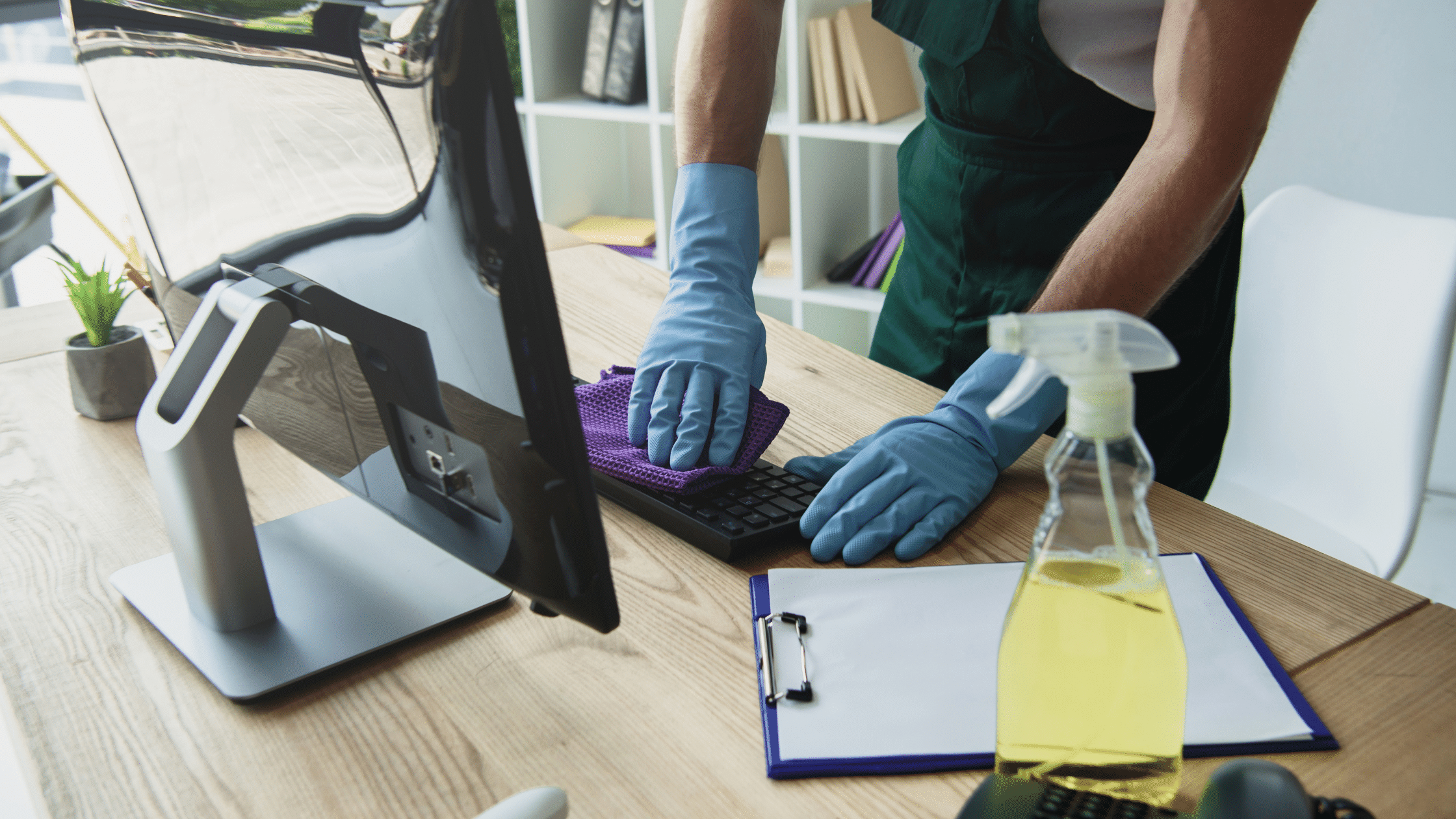
Personal equipment is handled constantly, often while eating, yet is rarely written into daily cleaning specifications. Keys and handsets collect skin cells, crumbs and bacteria. They need a dedicated wipe-down with antibacterial products safe for electronics, not a damp cloth dragged across the desk.
Light Switches and Power Sockets
Many people touch light switches many times a day, yet they’re seldom listed as routine tasks. Grime builds up on and around them, so disinfect switches and socket faceplates with a lightly dampened cloth or wipe, never a spray, to avoid any electrical hazard.
Door Handles and Push Plates
The handle is often wiped while the push plate, finger plate and frame surround are missed. These surfaces are touched just as often and collect marks and bacteria, so treat every contact surface on a door as a single cleaning unit.
Air Vents, Grilles and Ceiling Fans
Vents and grilles sit above eye level, so they are easy to ignore, but the dust they collect is redistributed into the room whenever the ventilation runs. They need periodic vacuuming and wiping, a P3 task (periodic task) missing from many standard specifications.
The Undersides of Desks and Chair Bases
Few people look under a desk, which is exactly why dust, debris and chewing gum collect there. Chair bases and castors gather fluff and hair that can scratch hard floors. Both should be named tasks within a regular office deep cleaning cycle.
Communal Kitchen Appliance Handles and Controls
Microwave handles, kettle bases, toaster levers, fridge door seals and coffee machine buttons are touched by most of the office every day. They are often wiped around rather than properly cleaned, yet each needs disinfecting with a food-safe product, with fridge seals checked for mould.
Lift Buttons and Shared Touchscreens
Lift buttons, visitor sign-in screens and room booking panels are used by everyone in the building, including visitors. Because they belong to no single team, they are often left to chance, so include them in a scheduled disinfection round rather than relying on ad hoc attention.
Blinds, Curtains and Window Ledges
Horizontal surfaces collect dust quickly between periodic cleans. Venetian and vertical blind slats are particularly prone to build-up, which falls back into the room when blinds are adjusted. They need dedicated slat cleaning on a set schedule, not occasional dusting.
Skirting Boards and Dado Rails
Skirting boards and dado rails sit outside the natural eyeline during cleaning, so they are consistently missed in daily routines. In busy corridors and meeting rooms, dust and scuff marks build up quickly, but scheduled dusting and periodic wiping keep them clean.
Printer, Copier and Scanner Surfaces
Control panels, paper trays and scanner glass are used all day, yet rarely disinfected, as shared devices fall between cleaning and IT responsibilities. Include them in a shared equipment hygiene protocol, using products the manufacturer recommends so screens and glass are not damaged.
Overlooked Areas at a Glance
Overlooked Area | Risk Type | Recommended Frequency |
Keyboards, mice and desk phones | High-touch | Daily |
Light switches and sockets | High-touch | Daily |
Door handles and push plates | High-touch | Daily, or more often in busy areas |
Kitchen appliance handles | High-touch | Daily |
Lift buttons and touchscreens | High-touch | Daily, or more often in busy buildings |
Printer and copier surfaces | High-touch | Daily |
Air vents and grilles | Low-visibility | Periodic (P3) |
Desk undersides and chair bases | Low-visibility | Periodic (P3) |
Blinds and window ledges | Low-visibility | Weekly ledges, periodic blinds |
Skirting boards and dado rails | Low-visibility | Weekly dusting, periodic wiping |
High-Touch vs Low-Visibility: Understanding the Two Blind Spot Categories
A simple way to prioritise office hygiene problem areas, and decide where to focus effort first, is to sort them into two categories:
- High-touch blind spots, such as keyboards, lift buttons and door handles, carry an immediate hygiene and transmission risk. They need daily attention, or twice daily in busy areas.
- Low-visibility blind spots, such as vents, skirting boards and blinds, carry a gradual risk to air quality and asset condition. They need scheduled treatment, usually weekly or as P3 tasks.
Each category calls for a different approach. High-touch areas are best handled through structured disinfection rounds at set times, while low-visibility areas belong in a periodic task schedule with planned dates and clear ownership.
A well-structured cleaning specification addresses both explicitly, as named tasks with defined frequencies rather than as afterthoughts. Separating them also makes audits simpler, as each category can be checked against its own standard and frequency.
How to Tell If Your Current Cleaning Provider Is Missing These Areas
A short walk-round of your office using the list above will quickly show whether these areas are covered. Check for:
- dust on vents, grilles and blind slats
- grime around light switches and door push plates
- residue on microwave handles and fridge seals
- debris under desks and around chair castors
- dust and scuffs along skirting boards in corridors
For an objective view, carry out a formal cleaning audit. This measures the work actually delivered against your specification and professional office cleaning standards, scores each area and records gaps, giving you clear evidence to discuss with your provider.
A quality commercial cleaning provider should offer inspection reports and audit schedules as standard, rather than waiting to be challenged, and if yours does not, that is a gap in itself.
Not sure if your current cleaning is covering everything it should? We offer a free office cleaning audit to identify gaps in your current provision.
What a Thorough Office Cleaning Specification Should Include
The cleaning specification is the document that stops blind spots forming in the first place. It should be a working operational tool, not a formality. A thorough specification includes:
- Task-level detail: not just “clean kitchen” but named appliances and surfaces, such as microwave handles, fridge seals and kettle bases
- Frequency per task: each task assigned a daily, weekly or periodic frequency, often recorded as P1, P2 and P3
- Named responsibility: a clear owner for periodic and specialist tasks, including shared equipment that may fall between cleaning and IT
- Approved methods and products: the right approach for electronics, electrical fittings and food preparation areas
- Sign-off and audit: a completed-task checklist, with regular audits to catch specification drift early
Review the specification whenever your office layout, headcount or use of space changes, so it keeps pace with how the building is actually used. Share it with your provider and use it as the basis for every audit.
FAQs
What are the most germ-prone surfaces in an office?
Shared, frequently touched surfaces carry the highest risk, including kitchen appliance handles, door handles, lift buttons and printer controls. Personal keyboards and phones are also a concern when staff eat at their desks.
How often should high-touch office surfaces be cleaned?
At least daily, and more often in busy areas or during seasonal illness. Reception desks, entrance doors and lift buttons may need two or more disinfection rounds a day.
What should be included in an office cleaning checklist?
Every area and item, named individually, with a frequency and method for each. It should also include space for sign-off, so completed tasks can be verified.
How do I know if my office cleaning contractor is thorough enough?
Ask for their audit reports and compare them with your specification. A thorough contractor will share inspection results, flag issues and agree corrective actions without being asked.
Why Choose Us for Thorough, Audited Office Cleaning
We build cleaning programmes around detail, not just appearances. That means:
- specifications that name every area and surface, including those others miss
- scheduled disinfection rounds for high-touch surfaces
- periodic tasks planned and tracked, not left to chance
- regular audits and inspection reports shared with you as standard
Conclusion
Most overlooked areas during office cleaning have one thing in common: they were never clearly specified. Keyboards, light switches, vents, blinds and shared equipment are easy to miss unless they are named, scheduled and checked.
A detailed specification, backed by regular audits, turns those blind spots into routine tasks.
Don’t leave your office hygiene to chance. Get in touch with our team to discuss a fully specified cleaning programme that covers everything, including the areas others miss.